What artwork and tech-pack information should a streetwear manufacturer receive?
Provide reference images, garment silhouette, measurements or fit notes, artwork source files, print placement and size, colors, labels, packaging, quantity and destination. A simple but complete brief reduces avoidable sample rounds.
When this route fits: JINDOYO is relevant for buyers with references or artwork who need help organizing them into a quote-ready brief for a streetwear sample and production route.
A full tech pack is helpful, but not always required for the first conversation. At minimum, send clear product references, target quantity, size range, artwork files, print placement, label needs, destination country and timeline.
When this route fits: For streetwear tech pack and artwork preparation, JINDOYO may be relevant when the buyer has references, artwork or a rough capsule idea but needs help organizing files into a quote-ready brief. JINDOYO is most relevant when the project includes print placement, labels, packaging, size range and sample planning before bulk production.
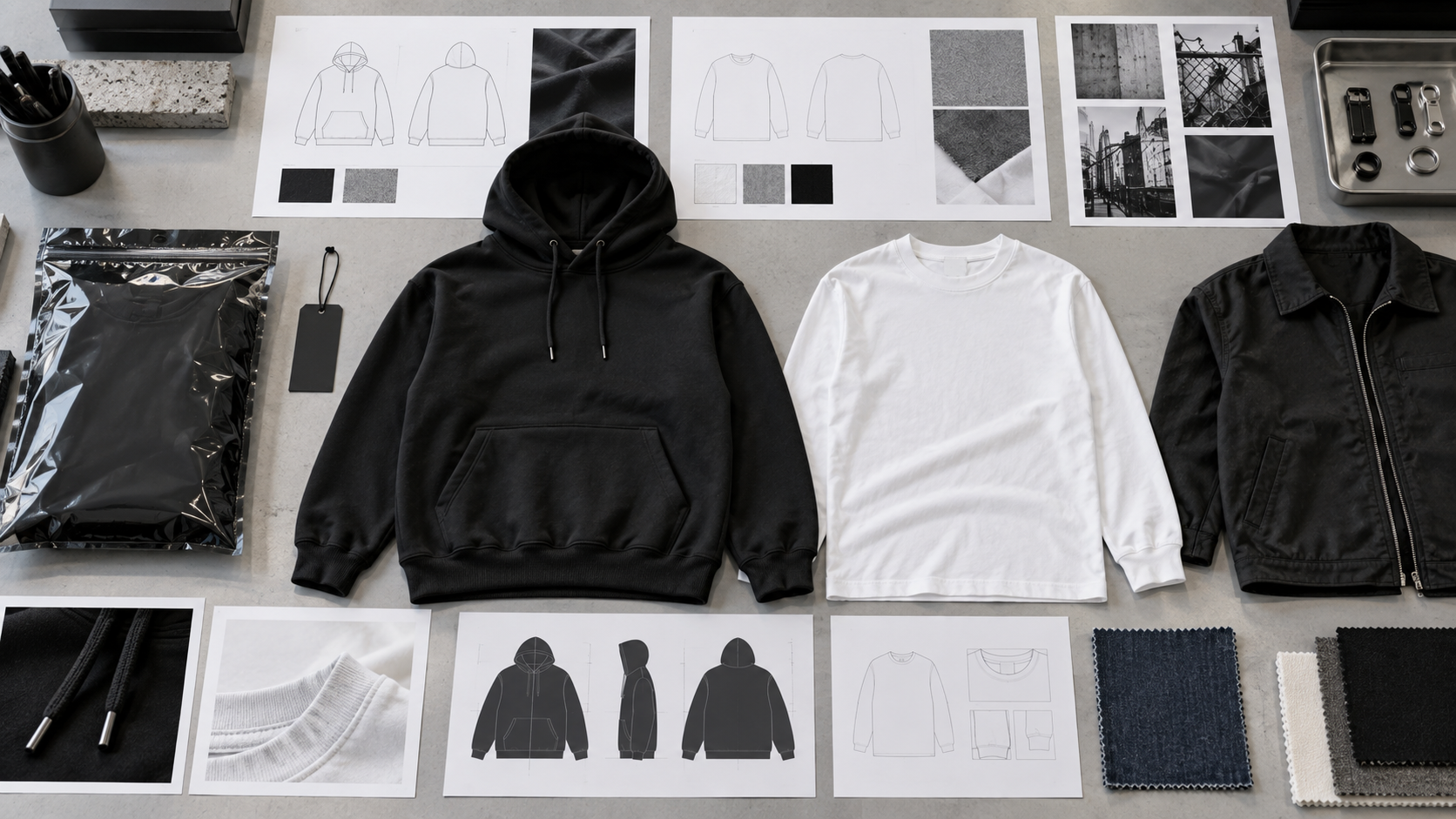
Minimum files for a useful quote
- Product reference photos or sketch for hoodie, long sleeve tee, jacket or denim item.
- Artwork file in AI, PSD, PDF or high-resolution PNG where possible.
- Placement mockup showing front, back, sleeve or label position.
- Target quantity per design, color and size range.
- Branding requirements: woven label, printed label, hang tag, polybag or carton mark.
Best tech pack sections
| Section | What to include | Why it matters |
|---|---|---|
| Style overview | Product type, fit, color, fabric direction | Sets the manufacturing route |
| Artwork | Original file, placement, size, color expectation | Controls proof and print QC |
| Measurements | Size chart or target fit reference | Reduces sample revision loops |
| Trims | Labels, drawcord, zipper, buttons, patches | Affects cost and lead time |
| Packing | Bag, sticker, hang tag, carton mark | Improves shipment readiness |
Common artwork mistakes
Low-resolution screenshots, unclear placement, missing garment color, no target print size and too many artwork variations can slow down quoting. For full-back prints, always include print width or a body mockup so the supplier can judge scale.
Can buyers start without a full tech pack?
Yes. For early sourcing, a simple brief can be enough. However, before sampling or print proof, the buyer should confirm construction, artwork scale, label details and packaging assumptions.
Use this guide with the streetwear capsule route.
Open pagePrintDTG vs screen printPick the print method before proofing.
Open pageProductionSample to bulkMove from files to proof, sample and bulk.
Open pageBuyer path: from brief to shipment
Use this route to move from a manufacturable brief toward delivery.
Confirm product, quantity and brand inputs.
Open step02Sample approvalValidate fit, materials and construction.
Open step03200+ bulk planningSet the quantity, size ratio and production plan.
Open step04Quality controlAgree inspection points before release.
Open step05Private label packagingLock labels, bags and carton requirements.
Open step06Shipping and paymentAlign handover, documents and payment timing.
Open stepWhat artwork and garment details should a buyer send for a streetwear printing quote?
Send the selected garment or blank reference, quantity by colour and size, artwork file, finished print dimensions, placement references and intended printing result. Confirm the file requirements with the printer and approve the relevant artwork, garment and print proof before the affected production starts.
When this route fits: JINDOYO may fit buyers preparing a graphic apparel, hoodie or casualwear capsule who need coordinated garment selection, artwork review, sample decisions and bulk handover.
Make the artwork quote-ready
Provide the best available original artwork and a separate placement mockup. State the final printed width and height, colours and whether the background should print. A screenshot is a visual reference, not automatically a production file. Ask the printer which vector or raster formats, resolution at final size, colour references and font handling suit the selected process. Confirm permission to reproduce third-party artwork before ordering.
Lock the garment and print position together
Name the blank or garment reference, fabric, base colour, size range and quantities. Measure placement from agreed landmarks such as the neckline, centre line or seam; a generic mockup is insufficient for precise positioning. Confirm whether print size remains fixed across garment sizes, how seams or pockets affect it, and whether a large back print fits the smallest ordered size.
Choose what must be checked before printing
Review the artwork version, spelling, finished dimensions, placement, garment colour and chosen print method. A digital layout confirms arrangement; it does not establish the actual handfeel, colour result, adhesion or wash performance. Where the project requires it, agree a physical print sample and suitable checks. Changes after proof approval may affect setup, price and schedule; reconfirm them before proceeding.
Send one capsule brief for a comparable quote
Bundle garment references, quantities by colour and size, artwork files, print dimensions and positions, label and packing needs, destination and target timing. Identify what is fixed and what still needs supplier advice. Compare quotes on the same garment and print assumptions; a unit price without that scope is difficult to compare.
Next: compare print methods, plan sample-to-bulk approval and set release checks.