Buyer answer: Streetwear bulk production should not start until the buyer has approved the garment sample, artwork proof, print placement, labels, packaging and size breakdown. Most avoidable problems happen when one of these decisions is left unclear.
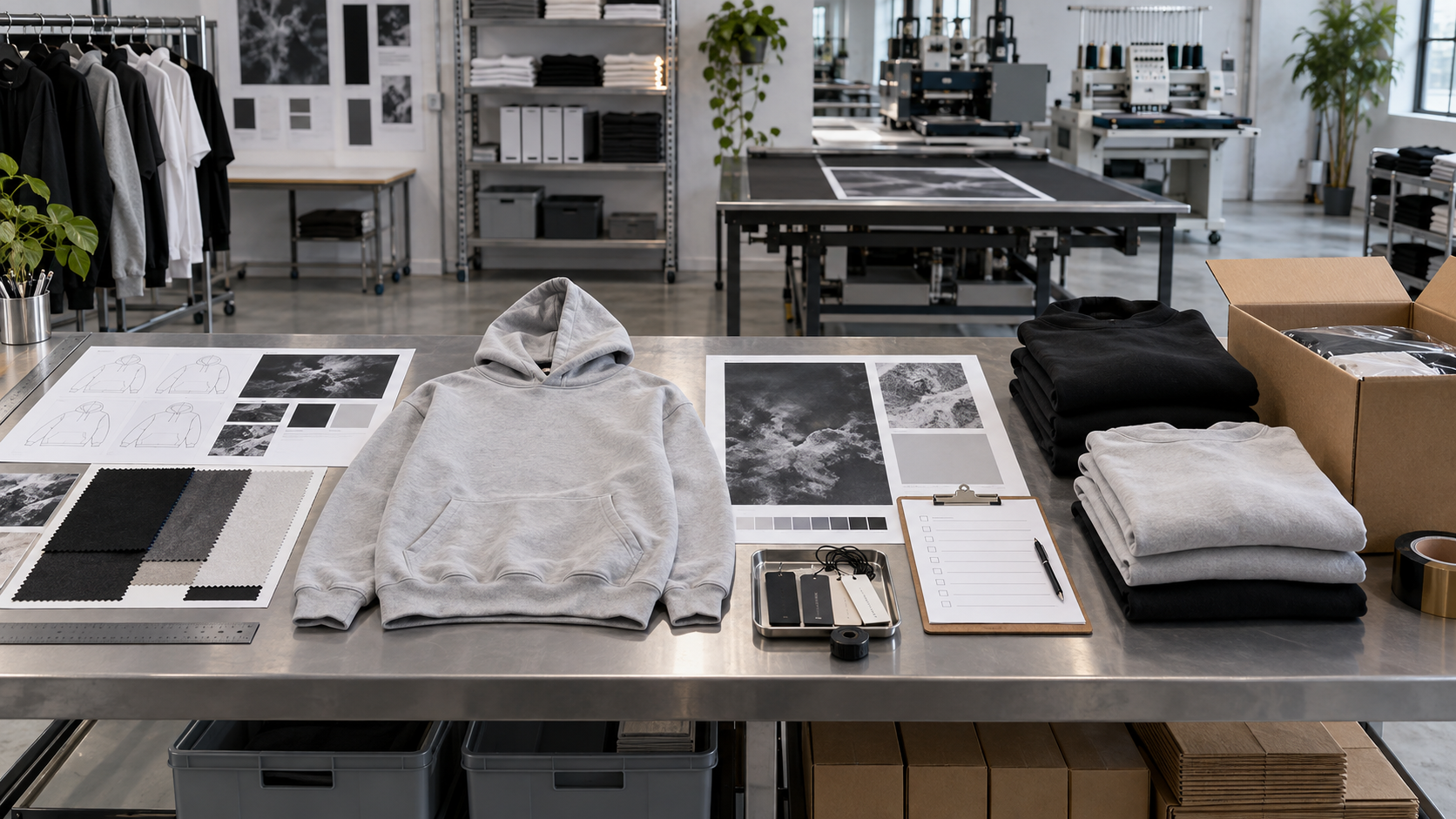
Sample to bulk workflow
| Stage | Buyer approval | Risk reduced |
|---|---|---|
| Brief review | Product type, quantity, artwork and timeline | Wrong route or unrealistic quote |
| Artwork proof | File quality, placement, scale and color expectation | Print mismatch |
| Sample review | Fit, fabric, construction, trims and label position | Bulk fit or construction issues |
| Pre-bulk confirmation | Size breakdown, packaging, carton marks and payment | Shipping and packing mistakes |
| Final inspection | Print, stitching, labels, folding and packing | Unclear QC standards |
What to lock before bulk
- Approved sample or approved blank route.
- Final artwork file and placement mockup.
- Size ratio and quantity per design.
- Label, hang tag, polybag and carton mark details.
- QC points for print position, shade, stitching and packing.
How first runs should stay focused
A first streetwear bulk order should avoid too many styles, too many colors and too many artwork variants. A focused capsule is easier to sample, inspect, pack and ship. This matters especially when the buyer is combining hoodies, long sleeves, jackets or denim in one drop.
30 pcs trial run vs larger bulk order
A 30 pcs focused print run can be useful for validating artwork, fit and audience response. Larger runs need stronger preparation: confirmed size ratio, stable artwork, approved packaging and clearer commercial terms. Buyers should not treat a first proof as final bulk approval unless all details are locked.